
Your furnace is tired, the AC is barely keeping up in August, and now you are being told a heat pump can replace both. The question is simple: what does it actually cost in the Bay Area?
The answer depends on the house. A Pleasanton tract home with clean attic access and usable ducts is not the same job as an older Fremont home with a full panel, tight crawlspace, and ducts that leak into the attic. Equipment size matters, but so do electrical work, duct condition, refrigerant line routing, permits, controls, and rebate paperwork.
For 2026 budgeting, most Bay Area heat pump installs fall from the low five figures to the high five figures. Small ductless jobs can be less. Full ducted variable-speed systems with duct replacement and electrical upgrades can cost much more.
Bay Area heat pump installation cost ranges
Here are practical installed cost ranges we see homeowners using for 2026 planning:
- Single-zone ductless mini split: $5,000 to $9,500
- Two-zone ductless mini split: $9,000 to $16,000
- Three to five-zone ductless system: $15,000 to $28,000+
- Ducted central heat pump replacement: $14,000 to $28,000
- Ducted heat pump with major duct repairs or replacement: $20,000 to $38,000+
- Dual-fuel heat pump with gas furnace backup: $18,000 to $32,000+
These are installed ranges, not online equipment prices. A real install includes labor, refrigerant line work, condensate routing, electrical connections, startup, controls, and normal permit handling.
The low end usually means clean access, enough electrical capacity, short line runs, usable ducts, and a simple equipment swap. The high end usually means tight attic work, long refrigerant runs, zoning, panel limitations, duct leakage, roof work, or premium inverter equipment.
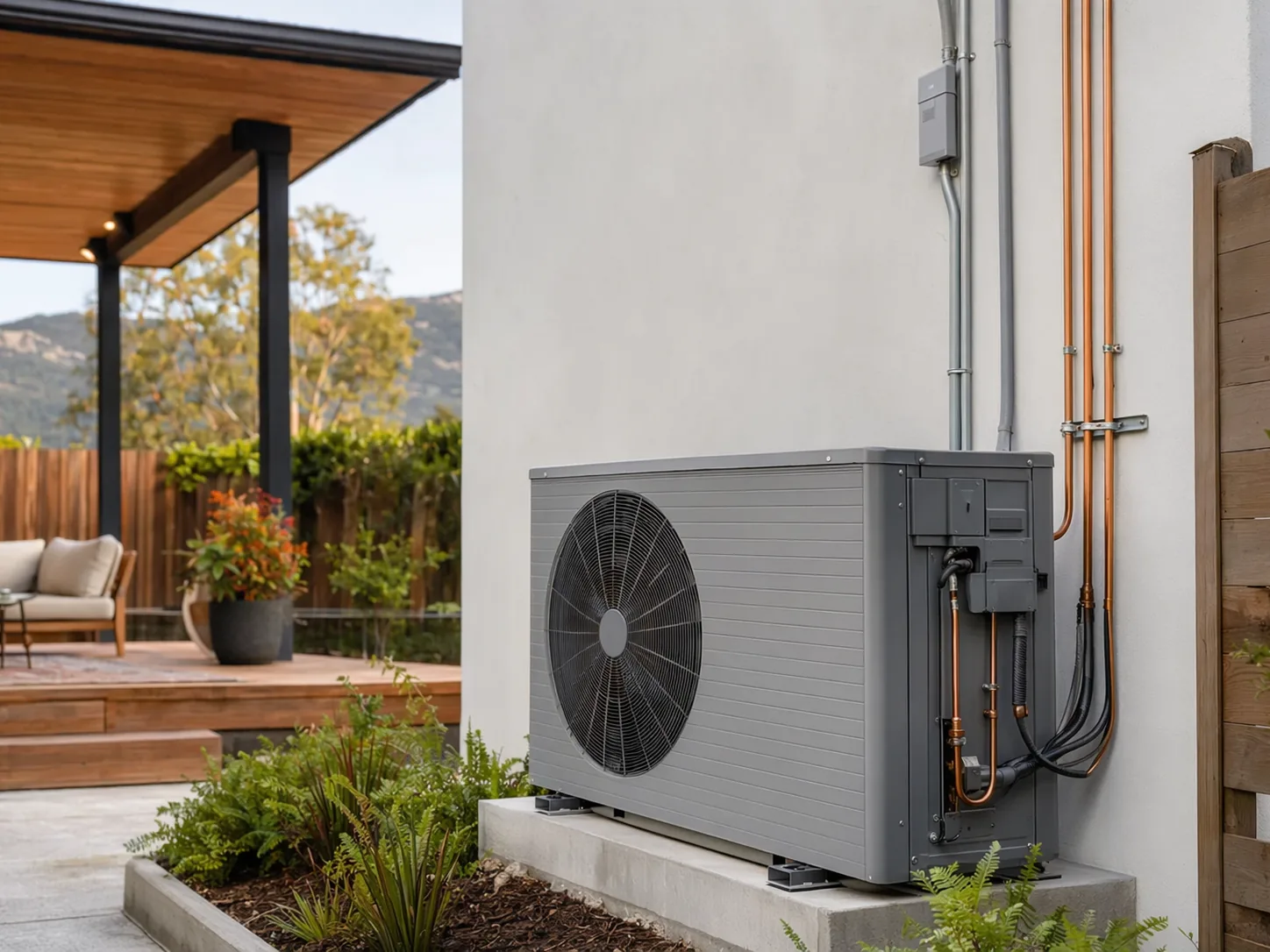
A heat pump is not just an outdoor box. A proper heat pump and HVAC installation includes load sizing, equipment matching, airflow setup, refrigerant charging, thermostat setup, and commissioning. That work is what decides whether the system is quiet, efficient, and comfortable after the crew leaves.
What changes the price the most
The biggest cost driver is the system type.
A ductless mini split is usually less invasive. It needs an outdoor condenser, one or more indoor heads, refrigerant lines, a drain path, and electrical. It is a good fit for ADUs, additions, garages, offices, bonus rooms, or bedrooms that never stay comfortable.
A ducted heat pump uses an air handler and your duct system, if the ducts are worth using. Many Bay Area homes have attic or crawlspace ducts that were originally installed for a gas furnace. If those ducts are undersized, leaking, crushed, disconnected, or poorly insulated, a new heat pump will not perform the way it should.
Other cost drivers include:
- Electrical capacity: Many heat pumps need a dedicated 240V circuit. Some homes need breaker work, a subpanel, or a service upgrade.
- Duct condition: Sealing, resizing, insulating, or replacing ducts adds cost but can fix long-term comfort problems.
- Equipment efficiency: Variable-speed inverter systems usually cost more than basic single-stage equipment.
- Zoning: Multiple thermostats and motorized dampers add parts, wiring, setup time, and balancing work.
- Access: Low attics, crawlspaces, flat roofs, and tight side yards take more labor.
- Refrigerant lines: Long, hidden, or difficult line sets add material and time.
- Permits: Bay Area cities usually require mechanical permits, and some jobs need electrical permits too.
New heat pump systems now commonly use lower-GWP A2L refrigerants such as R-454B or R-32, depending on the manufacturer. You will also see efficiency ratings like SEER2 for cooling and HSPF2 for heating. Higher ratings can help, but only if the system is sized, ducted, charged, and commissioned correctly.
Central heat pump, mini split, or dual fuel
The right setup depends on the house and the goal.
A central ducted heat pump makes sense when the home already has usable ductwork and you want one system to serve the whole house. This is common in Pleasanton, Dublin, San Ramon, Livermore, and other Tri-Valley homes with attic duct systems.
A ductless mini split makes sense when ducts are missing, damaged, or not worth rebuilding. It also works well when one area has a problem the main system never fixed, like an upstairs bedroom, converted garage, home office, sunroom, or ADU.
A dual-fuel system pairs a heat pump with a gas furnace. The heat pump handles most heating days. The furnace can take over when needed or when the homeowner wants gas backup. This can be a practical middle step for homes where the furnace is newer or where full electrification is not the plan yet.
The mistake is buying based only on the tonnage of the old AC. Heat pumps handle both heating and cooling, so sizing matters. Oversizing can cause short cycling, uneven rooms, more noise, and poor comfort. Undersizing can leave the house struggling on cold mornings or hot Tri-Valley afternoons.
A proper Bay Area HVAC installation should include a load check, duct review, electrical review, and written scope before the contract is signed.
Rebates and tax credits to check in 2026
Rebates can lower the net cost, but they change often. Do not build your whole budget around an incentive until someone confirms your address, equipment model, contractor requirements, and timing.
Programs to check include:
- TECH Clean California: This statewide program has offered heat pump incentives through participating contractors. Funding windows, eligible equipment, and requirements can change.
- BayREN Home+: BayREN serves the nine-county Bay Area and has offered residential energy upgrade incentives. Eligible measures and rebate amounts can change by program cycle.
- Local utility programs: PG&E and local energy agencies may list active rebates, financing, or electrification programs.
- Federal tax credits: The 25C Energy Efficient Home Improvement Credit previously allowed qualified heat pump tax credits, but under current federal law it is not available for systems placed in service after December 31, 2025. Homeowners should verify current IRS rules before counting on any federal credit.
For incentive eligibility, the exact equipment pairing matters. A model number for the outdoor unit is not enough. The indoor air handler, coil, or ductless head also matters because efficiency ratings are based on matched combinations.
Timing also matters. Some rebates require pre-approval before work starts. Some are contractor-applied. Some are claimed later by the homeowner. If the paperwork is missed, the rebate may be lost.
How to compare heat pump bids
A cheap bid is not always the cheapest job after change orders. A high bid is not automatically better either. Compare the scope line by line.
A complete heat pump proposal should show:
- Outdoor unit model number
- Indoor unit, coil, or air handler model number
- Matched system efficiency ratings
- Thermostat or control type
- Ductwork included or excluded
- Electrical work included or excluded
- Permit handling
- Condensate drain plan
- Refrigerant line replacement or reuse
- Warranty terms
- Rebate paperwork responsibility
Ask how the system will be commissioned. Startup is not just turning it on. The installer should check airflow, static pressure, refrigerant charge, temperature split, drain operation, thermostat staging, defrost operation, and heating performance.
For ducted systems, static pressure is a big deal. If the ducts are too restrictive, the blower works harder, noise goes up, capacity drops, and parts wear faster. This is one reason two bids for the same tonnage can be thousands apart. One contractor may be ignoring the duct problem. Another may be pricing the work needed to make the system run correctly.
Talk to an Onzone tech
If you want a straight number for your house, we need to see the equipment, ducts, panel, refrigerant line path, drain path, and access. Photos help, but an on-site look is better for heat pump pricing in the Bay Area.
Call Onzone Heating & Cooling at (650) 698-7979 or request help with your heat pump HVAC installation. We will tell you what can stay, what needs to change, and what the job is likely to cost before you commit.

